Fatigue
Fatigue can affect your driving by slowing your reactions, making it difficult to concentrate, and harder to accurately judge risk.
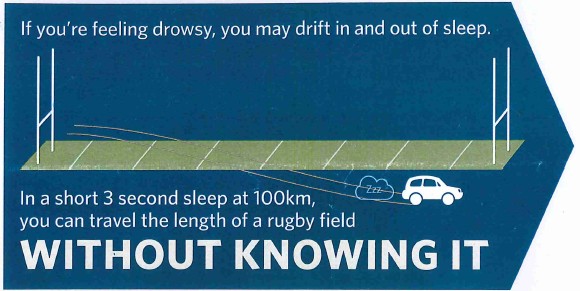
Being tired makes you more prone to driving mistakes. Tiredness-related collisions are three times more likely to result in death or serious injury.
Did you know if you drive after staying awake for 24 hours you are just as dangerous as someone who is over the legal blood alcohol limit?
Warning signs
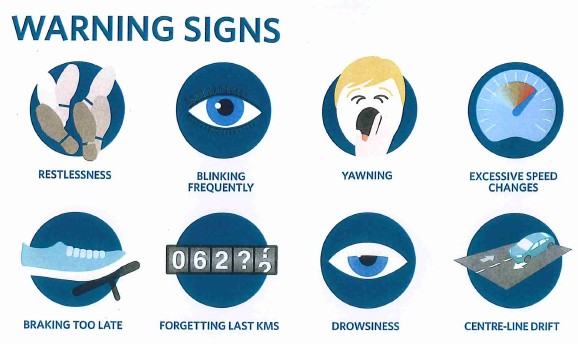
If you notice these warning signs, pull over and stop in a safe place and take a short nap of no more than 15 to 30 minutes. Much more than this and you might wake up feeling groggy.
Don’t be tempted to keep driving when you are tired just because you are close to your destination. Many tiredness-related collisions occur close to home because the driver has relaxed, and the body takes this as a signal that it is ok to fall asleep.
Common mythsMany of the things people do to stop themselves falling asleep at the wheel are only effective for a very limited time. The following do not work and will refresh you only for a short while:
- Drinking caffeine (energy drinks, coffee)
- Eating sugary snacks
- Getting out of your vehicle to stretch your legs.
- Opening the window.
- Turning up the radio volume.
Once fatigue has set in, no amount of willpower will keep you awake. The only answer is sleep and you should stop for a short nap or seek assistance to get home. It really can be a matter of life and death.
Ways to minimise risk
- Prioritise sleep - make sure you get enough sleep regularly. Most people need a minimum of 7-8 hours sleep every night.
- Snack lightly - choose light, fresh foods. Avoid fatty, sugary or carbohydrate-filled options.
- Take a break - take a break from driving at least every two hours.
- Drive at natural times - drive during times when you're normally alert and awake.
- Stay hydrated - drinking water is one of the best ways to stay alert.
- Check your medications - be sure they won't affect your alertness on the road. Ask your GP or pharmacist if you're unsure.
- Share the driving - break up long times by sharing the driving with other licensed drivers.
- Avoid alcohol and drugs - alcohol and drugs will only increase your risk


